-
Public Art
-
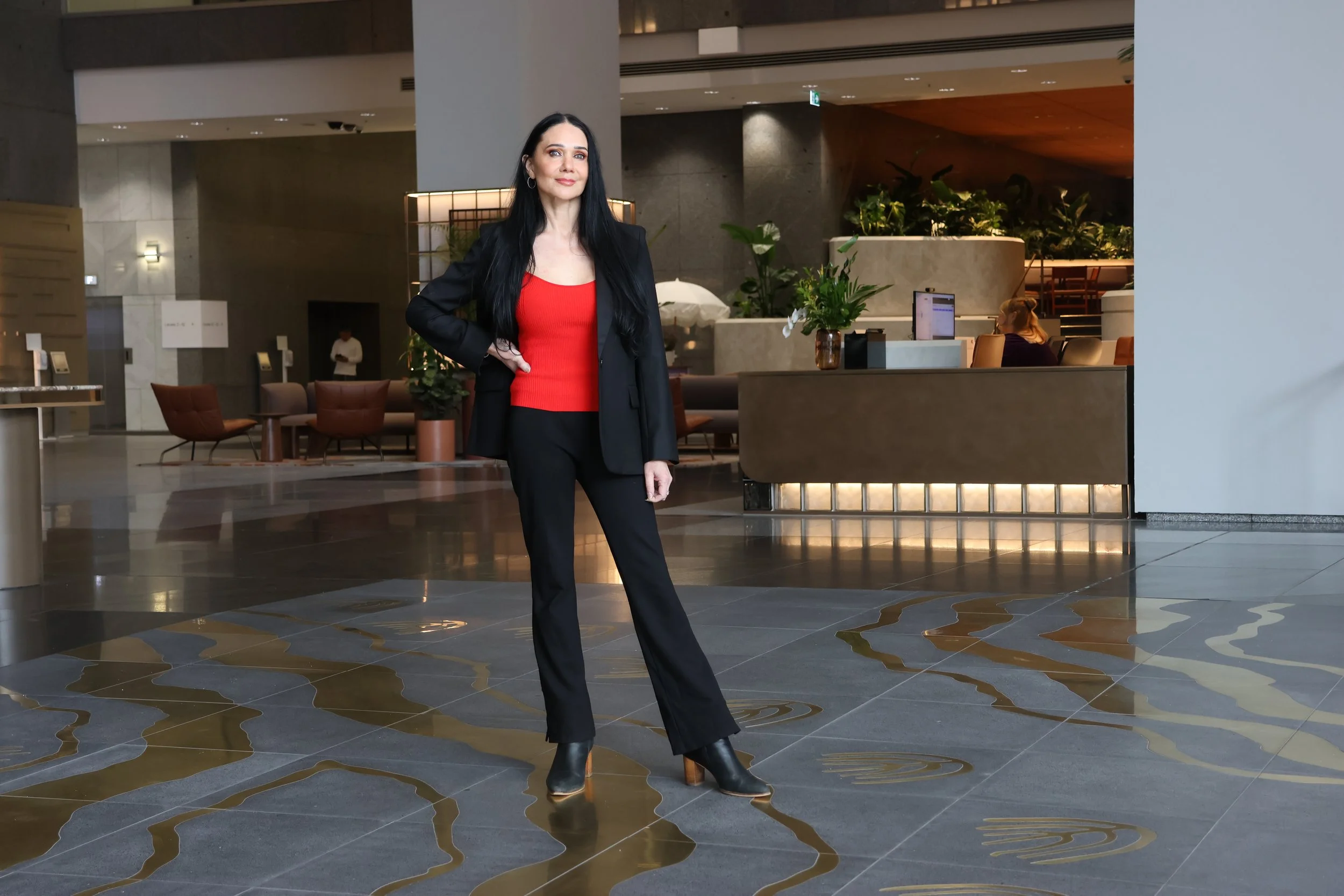
Simone Thomson (Wurundjeri / Yorta Yorta)
-
Curatorial Strategy
Fabrication
Documentation
Artist Services
End to End Project Management
-
Architectus
Charter Hall
Telstra
The significance of site-specific story
At 242 Exhibition Street, the lobby becomes more than a passage. It is redefined as a cultural threshold, a place where architecture and art converge to create an encounter with Country, and story.
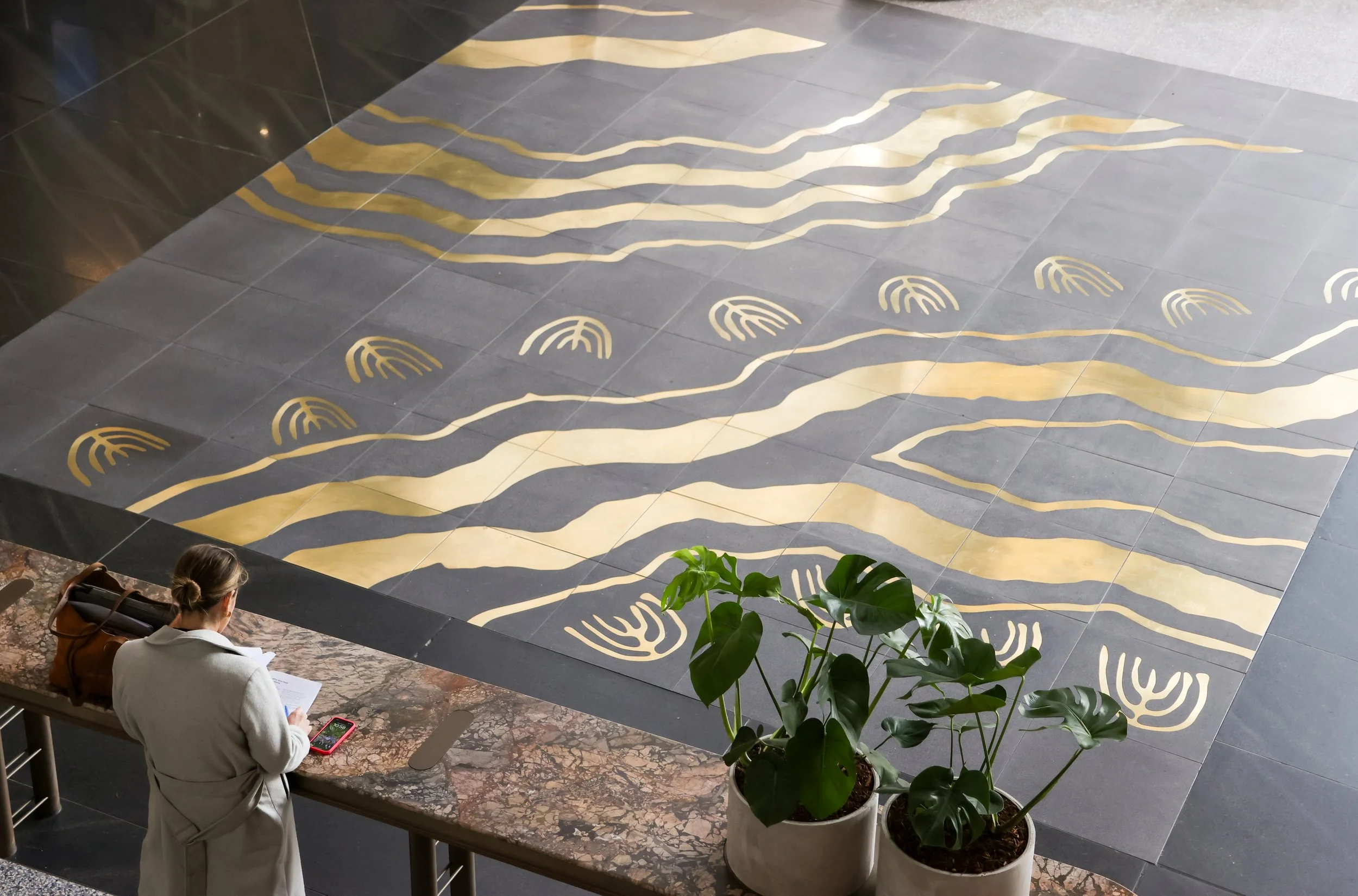
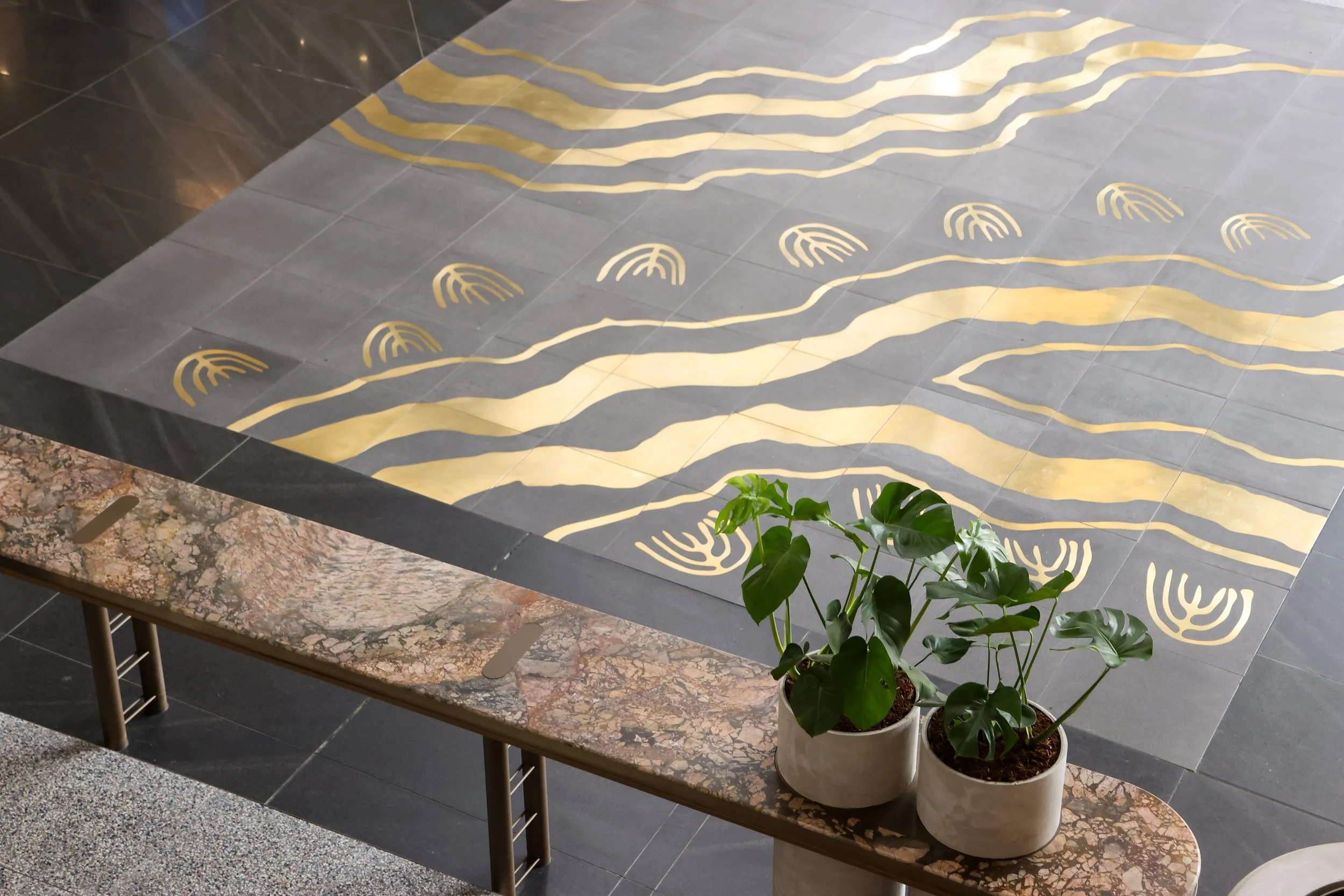
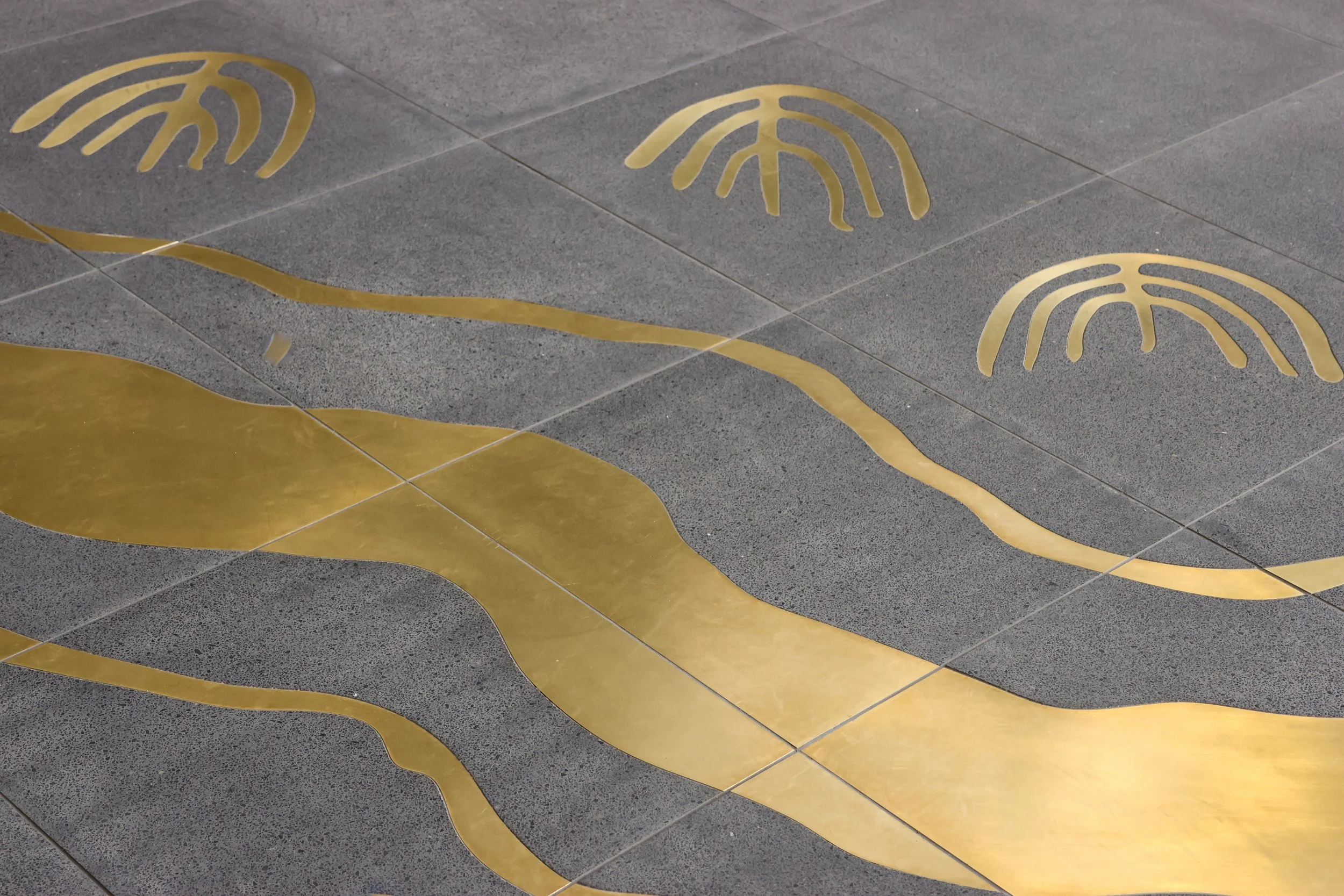
Yinga Baan — Song of Water, by Wurundjeri/Yorta Yorta artist and designer Simone Thomson, traces the story of the Birrarung — the River of Mists and Shadows. A narrative of flow, resilience and deep connection to land, the work grounds the lobby experience in an enduring cultural presence.
Our role
Our role was to steward this vision from site to inception and built form. Working closely with the artist we reviewed site and material translations, providing curatorial support and technical translation to ensure the integrity of her story remained at the heart of the final work. Through close collaboration with the artist, her original painting details were reimagined in laser-cut brass and hand-set tile, materials chosen for their capacity to carry light, texture and permanence.
The result is an integrated artwork that sits within the architecture rather than upon it — a surface alive with shifting detail, welcoming those who enter with a story that predates the city itself. In celebrating water as both life force and memory, the work transforms the lobby into a site of connection, where contemporary design acknowledges and amplifies cultural narratives of place.



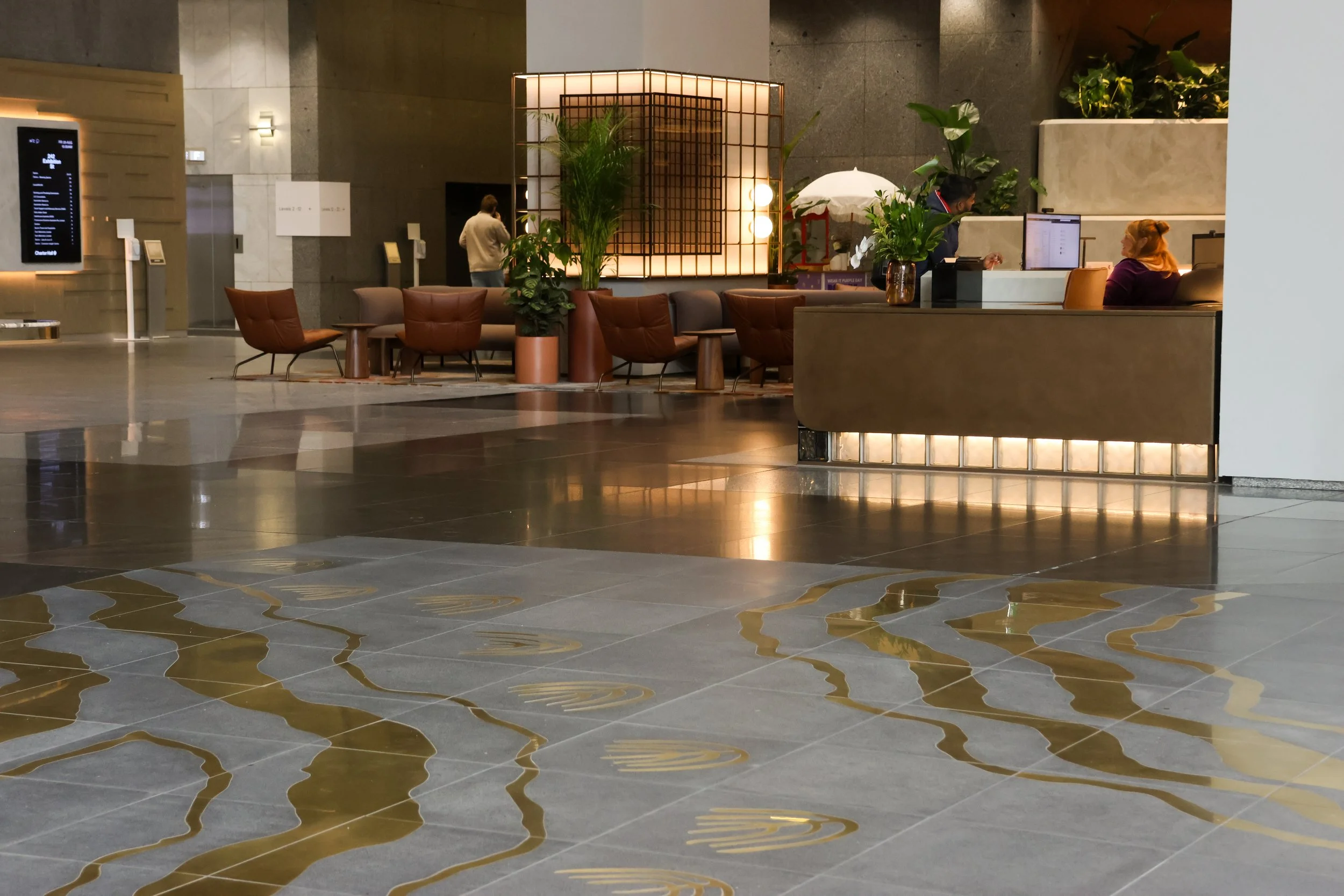

Yinga Baan, Song of Water
From its birthplace at the southern slopes of the Great Dividing Range, to the saltwater Bay in Narrm, Melbourne — Birrarung, river of mist and shadows casts a spell on Country with its majestic weaving across the landscape. This important and sacred lifesource has been a crucial meeting place for Wurundjeri Woi-Wurrung Peoples and Kulin Tribes for thousands of years and was the site of ceremony, trade and cultural business. Birrarung was once the site of a crystal waterfall and was abundant with colourful wildflowers and lush trees. This resource rich environment provided plentiful eels, river fowl, fish and shellfish, and was regularly used as a means of travel by bark canoes. Women would use string bags made of river reeds to collect edible plants and shellfish, and carry them around the fronts of their necks, while eels and fish were captured by woven funnel shaped baskets and stone traps. Clans lived along the offshoots of this waterway and camped along the riverbanks in huts made from sheet bark, sapling and leafy branches. We have a spiritual connection to the land and waterways, the sun and the moon and the stars. Our stories are in the heavens and earth and passed down over thousands of generations.
When Country sings, we listen. When water sings, we sing back. This is Yinga Baan, Song of Water.
—Simone Thomson (Wurundjeri Woi Wurrung, Yorta Yorta)